
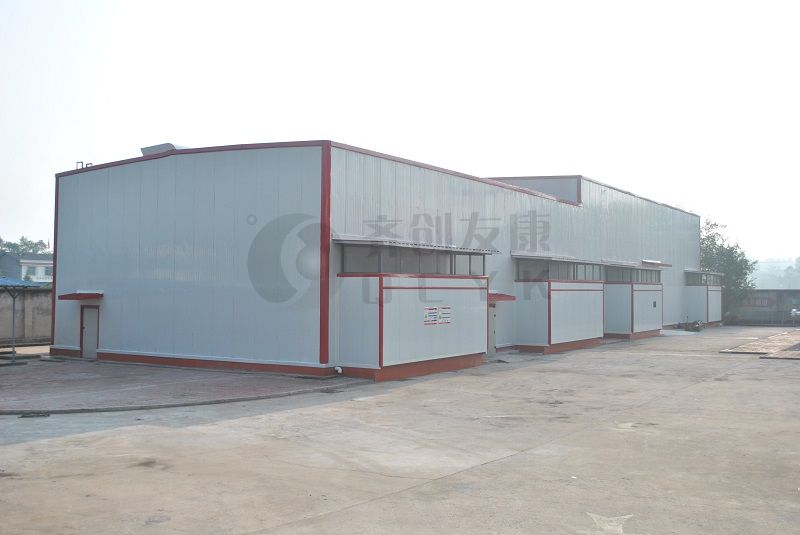
Noise issue:
The characteristics of noise generated by petroleum and petrochemical production enterprises are as follows: high noise level, prominent LF noise, long transmission distance and large pollution range. Especially, the frequency of certain noises is close to the natural frequency of human organs and may cause resonance and a decrease in the quality of work and life for station operators and nearby residents. Its noise is manifested in various aspects. There is the airflow noise generated by sudden changes in gas pressure, e.g. noise generated by the power cylinder during compressor lifting and boosting; there is also mechanical noise generated due to mechanical friction, vibration, impact and high-speed operation, e.g. noise generated by various transmission shafts during compressor operation. At present, our company mainly focuses on noise control for integrated NG compressors and split type compressors used in gas gathering, pressurized transportation, oil and gas treatment, gas lifting and production, light hydrocarbon recovery, and coalbed methane production and transportation.
Solution:
Although it is difficult to comprehensively control equipment noise in petroleum and petrochemical enterprises, we have pertinent technical measures. We firstly analyze the sound generation mechanism of the noise source in combination with the operating characteristics of the equipment, and then take practical comprehensive noise control measures, such as sound insulation, noise reduction, absorption, damping and vibration reduction, according to the characteristics of different sound source, so as to achieve good control effects. d on the characteristics of split type and integral compressors, we analyze their noise sources. The noise sources include blow-off ports and pipes of engines, air coolers, engine cylinders, air filters, intake manifolds, compression cylinders, machine bodies, intermediate bodies, flywheels, pulleys and belt drives. Major noise sources are blow-off ports and pipes of engines, intake and blow-off ports of air coolers, engine bodies and compressor bodies. The treatment plan is as follows:
1. Build a noise reduction plant: The noise generated by the compressor set inside the building is silenced and reduced by designing sound absorption and insulation structures on four-sided walls of the compressor plant; reasonable intake and blow-off systems are designed for ventilation and heat dissipation.
2. Noise reduction for air cooler: For split type compressors, blow-off silencers are arranged in the air cooler area; for integral compressors, a blow-off guide cover is installed at the blow-off port of the air cooler to lead the noise to the outdoor soundproof enclosure.
3. Noise reduction by silencer: For compressors, the blow-off noise of the engine is up to 105dB (A) or above, especially in the LF range. Therefore, it is necessary to design broadband silencers or secondary silencers in line with the noise reduction of each frequency range with the engine.
4. Vibration control: The vibration generated during the operation of the compressor may affect the structure of factory and surrounding buildings and equipment. So, a vibration reduction ditch is set up around the compressor foundation for treatment.
5. Boundary noise control: Sound barriers are constructed in sensitive areas to further meet the standard of boundary noise.
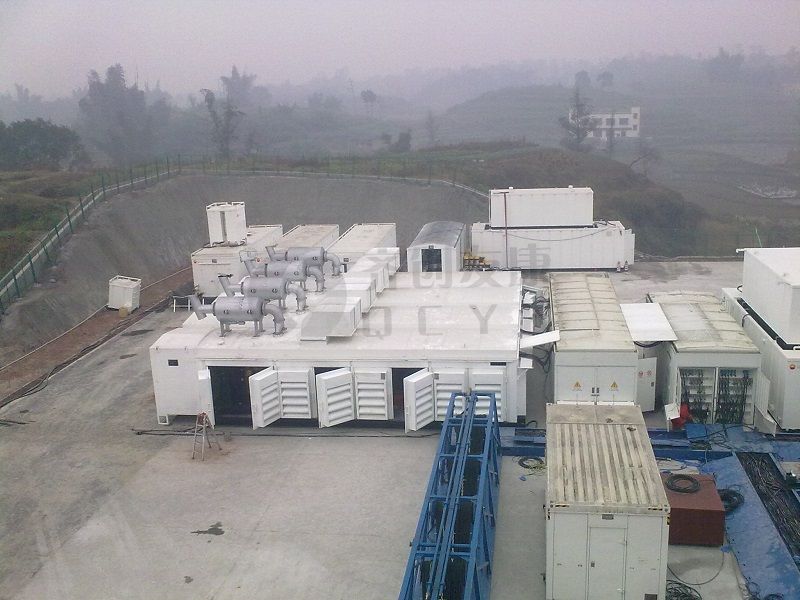
Noise issue:
Due to the characteristics of outdoor environment and high operational mobility, the pollution range of the noise generated during oil exploration and drilling is relatively limited and temporary. During the drilling process, various vibrations, impacts, collisions and rapid blow-offs of mechanical equipment, such as diesel generators, drilling pump units and vibrating screen of the drilling rig, as well as their s and foundation turntables, may produce harsh noise. These noises are intertwined and interactive and radiate from the main engine room to the surrounding areas. With the development of the petroleum industry and changes in the social environment, more and more drilling operations are located near residential areas and other sound-sensitive areas. So, noise disturbance is becoming increasingly prominent. It has seriously affected the smooth progress of drilling construction. In order to solve this contradiction, a reasonable and effective noise control plan is implemented by analyzing the operating noise of equipment on the drilling site.
Solution:
Diesel engine: Major noise sources in oil drilling operations include combustion and mechanical operation noise of cylinders, operation noise of cooling fan, exhaust channel noise, intake noise and start-up noise.
Other equipment: The high-speed airflow noise generated by the quick release valve is about 118dB (A), the noise at the chain transmission box is about 85dB (A), the average noise on the drilling floor is about 91dB (A), and the average noise in the pump room is about 94dB (A).
Noise generated by equipment on the drilling site: It is a point noise source and radiates to the surrounding areas in the form of spherical waves. It has the characteristics of MF and LF sound waves, with long wavelengths, weak directionality and slow attenuation. According to actual measurements, the average noise level is about 86.9dB (A) at the well site.
In summary, in response to current situation of noise emissions in drilling stations, noise reduction and control of diesel generator sets is critical to noise control in drilling stations. The treatment plan is as follows:
1. Install noise reduction enclosures: Install detachable noise reduction enclosures on the platform of diesel sets and use a rectangular plate type dissipative silencer on the ventilation system.
2. Noise reduction by sound barrier: Install sound barriers with detachable lightweight steel structures on the first and second floors of the platform on the drilling plane, respectively; install detachable sound barriers at sensitive points at the factory boundary, of which the noise reduction effect is about 18dB (A).
3. Noise reduction by silencers: To reduce the high-intensity airflow noise generated by the blow-off pipe, a high-efficiency silencer is installed to reduce its pollution to the environment. The blow-off pipe silencer is a multilevel-impedance composite silencer, which not only effectively reduces noise but also has a certain control effect on HF noise.
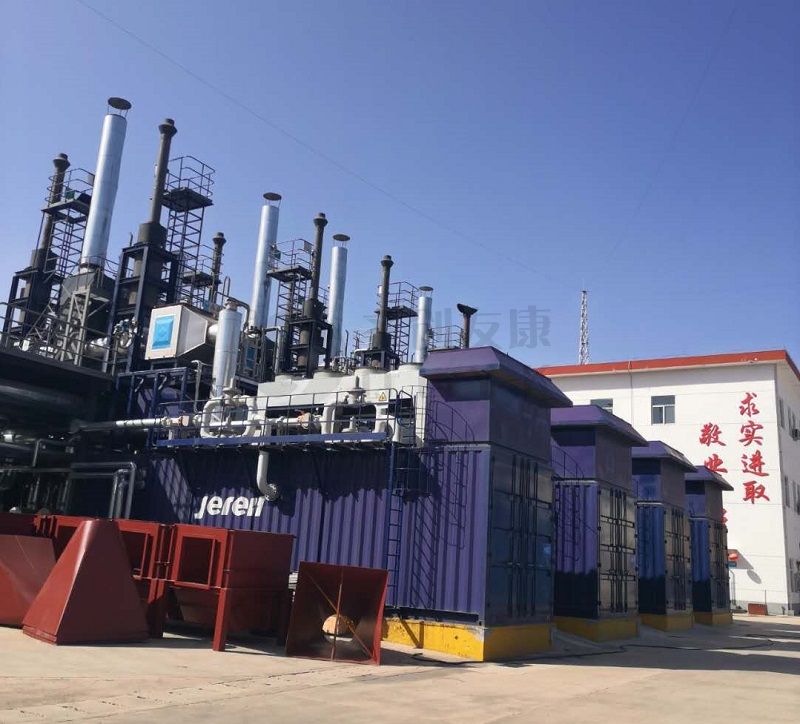
Noise issue:
Along with the development of urbanization, it is more difficult to control the distance between substations and environmentally sensitive points, such as residential areas and schools. The noise from substations poses a significant impact on the lives of nearby residents. In order to achieve harmonious development between substation construction and environmental protection, it is urgent to carry out noise pollution prevention and control in substations.
The main sound source is the transformer. The transformer noise is mainly generated by transformer body and cooling system. The vibration of the iron core caused by magnetostriction causes periodic vibration of the iron core along with changes in excitation frequency. The vibration is transmitted to the enclosure and accessories through the feet and foundation, stimulating surrounding air and generating noise. In addition, the magnetic flux leakage generated by the load current causes the vibration of the windings and oil tank walls, and the noise generated accordingly propagates in the form of waves to the surrounding areas.
Noise generated by auxiliary equipment: It mainly comes from the vibration during the operation of the cooling fan and oil pump as well as the rotation of connecting parts.
Sometimes, the vibration of the transformer body may be transmitted to the cooler through oil pipes, joints and assembly parts of the transformer, exacerbating their vibration and increasing their radiated noise.
Solution:
Take noise reduction measures - mainly cutting off the propagation path of noise. Specific noise reduction methods include noise reduction, sound insulation and sound absorption measures. Economically feasible noise reduction measures can be selected according to the prediction and analysis of excessive noise in substations.
1. Sound insulation: It is a method for isolating airborne noise through materials and components. Common forms include sound enclosures, sound insulation rooms and sound insulation screens; the common forms of sound enclosures include fan case, etc. in substations.
2. Noise reduction: Impedance composite silencers are used at the inlet (outlet) of the main transformer (reactor) to reduce LF and MF noise generated by the main transformer and MF and HF noise of the ventilation fan.
3. Sound absorption: Sound-absorbing materials are installed on indoor walls and ceilings of noise sources to shorten and adjust indoor reverberation time, eliminate echoes to improve indoor listening conditions and reduce indoor noise levels.
4. Vibration isolation: Vibration isolators are used for vibration isolation in substations to reduce the vibration of support structures or foundations caused by the disturbance of the machine itself.
5. Heat dissipation measures: In order to ensure the heat dissipation of the transformer, it is necessary to ensure the maximum ventilation required for each transformer. So, corresponding exhaust fans and silencers should be installed.
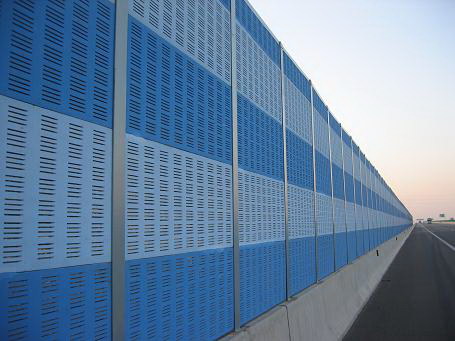
Noise issue:
In rail transit industry, the root cause of noise mainly focuses on noise and vibration problems caused by rail transit.
1. Noise generated by wheels and rails: It is the noise produced by the interaction between steel rails and wheels. The interaction of forces generated at the contact between the wheels and the rails causes the vibration of the wheels and the rails, which radiates sound waves outwards. These noises mainly include friction noise, impact noise and rolling noise.
2. Non-dynamic noise of vehicles: It mainly refers to the noise when the frictional vibration between brake pads and brake discs during braking stimulates self-excited vibration of brake pads, brake shoe brackets and brake discs.
3. Noise generated by traction power system: It is the noise generated by the operation of traction system equipment, including the noise of traction motors and their cooling fans, gearboxes and air compressors.
4. Noise generated by elevated tracks: When a train is traveling on an elevated track, the vibration generated by wheel-rail interaction is transmitted to supporting structures through the track, which propagates the noise to the surrounding area, forming a higher noise.
5. Noise from metro bearing ground: The vibration generated by the interaction between metro wheels and rails is transmitted to the tunnel structure and further to the surrounding soil. The vibration propagates through the soil to adjacent buildings, so that underground and wall vibrations and noise radiate to the rooms inside the buildings again. It is a LF noise. It is a quite serious interference source as well.
6. Crowd noise at passenger stations: Due to the large number of people gathering and flowing inside the station, crowd noise is also one of major sources of noise inside the station.
Solution:
The acoustic system generally consists of three components: sound source, propagation path and sound receiving point. For noise, efforts must be made to suppress its generation, propagation and interference with the listener. To completely eliminate noise, the only way is to control the noise source. However, it is difficult to eliminate noise from the root, but it can only be limited by various conditions and environments. Therefore, noise reduction should be carried out on the path of noise propagation. It is a common technology in noise control and an important part of noise control technology, including sound absorption, sound insulation, noise reduction, damping isolation, etc.
1. Sound barrier: Build sound absorption and insulation barriers on both sides of relevant tracks and urban roads. The sound barrier should be longer than the protected along the track. Upright, folded, curved or enclosed sound barriers can be selected according to different requirements.
2. Sound insulation windows: Install sound insulation windows in areas requiring both sound insulation and observation. The sound insulation windows should be selected according to sound environment quality and indoor allowable sound pressure level after noise reduction has been performed for sound source and propagation path.
3. Sound absorption: Sound-absorbing materials are installed on indoor walls and ceilings of noise sources to shorten and adjust indoor reverberation time, eliminate echoes to improve indoor listening conditions and reduce indoor noise levels.
Noise issue:
The noises of common power equipment include mechanical noise (noise generated by mechanical impact, friction, solid vibration and rotation, e.g. noise generated when starting textile machines, ball mills, chainsaws, machine tools and stone crushers), aerodynamic noise (noise generated by air vibration, e.g. noise generated by ventilation fans, air compressors, injectors, sirens, boiler exhaust, etc.), electromagnetic noise (noise generated by the interaction of alternating forces in a motor, e.g. noise emitted by generators, transformers, etc.), etc.
Solution:
1. Install sound enclosures on the equipment. For maintenance and installation purposes, the sound enclosures are designed to be detachable. Due to waste heat generated during equipment operation, ventilation and heat dissipation should be considered for the sound enclosures. Intake and blow-off ports should be set up and silencers should be installed additionally. If necessary, forced ventilation should be installed to facilitate rapid heat dissipation from the equipment.
2. Install a silencer at the intake. For the aerodynamic noise of equipment, the solution is to install a silencer at the intake or move the intake to a far distance or outdoors and then install a silencer. In this way, it is more effective in protecting the operating environment of operators around the equipment.
3. Vibration isolation and noise reduction for equipment or pipeline: Equipment vibration is a common problem encountered in operating environments on the site. Vibration not only causes fatigue damage to pipelines, supports and buildings, but also radiates noise. Generally, pipeline vibration is caused by two reasons: 1. Poor equipment dynamic balance or poor foundation design; 2. Airflow pulsation. Practice has proven that the vibration of most equipment and pipelines is caused by airflow pulsation and mechanical vibration. In general, the following three measures can be taken to reduce vibration. (1) Keep away from the resonance zone; (2) Install shock absorbers on the foundation; (3) Add orifice plates to pipelines.


